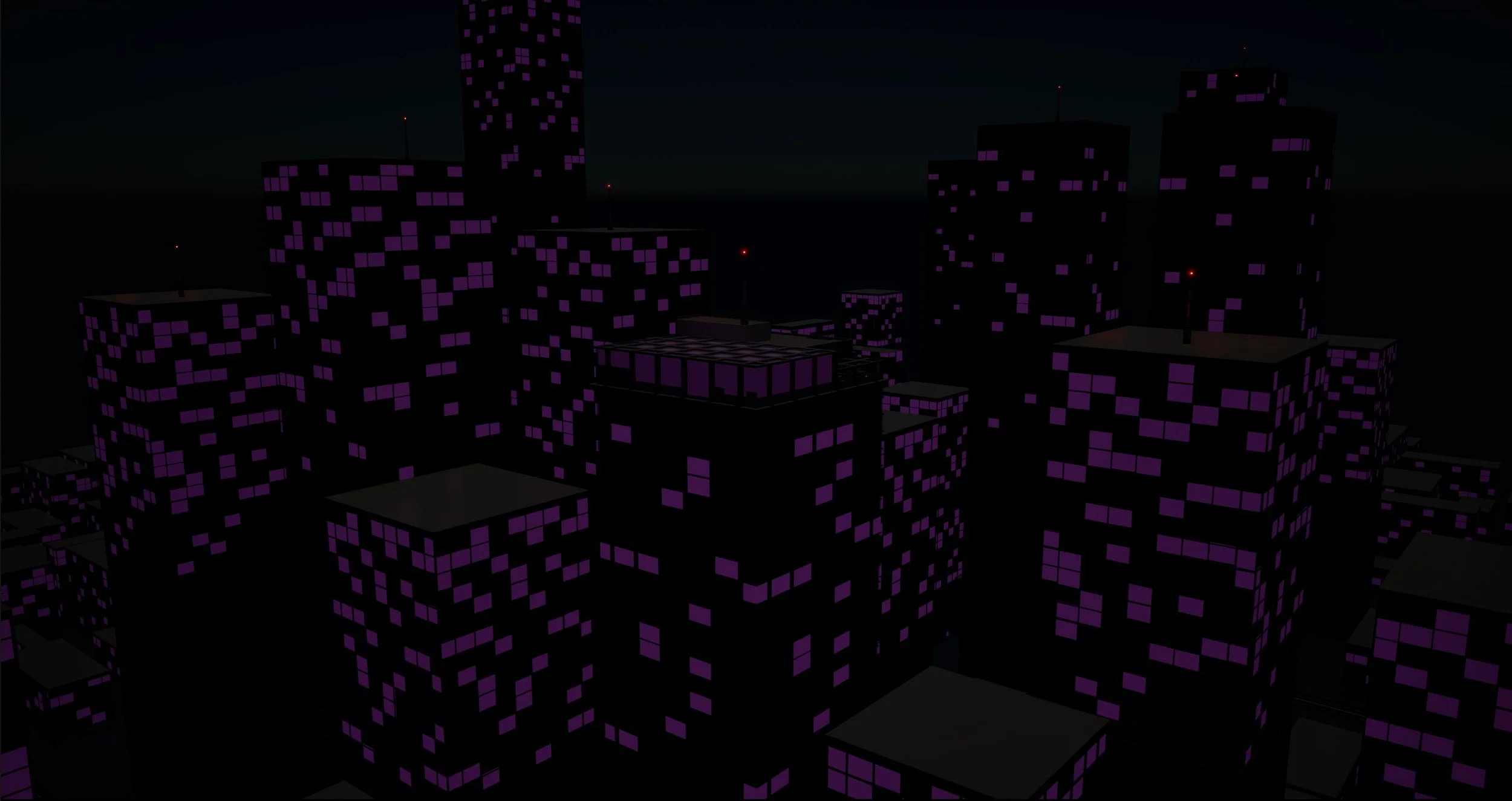
One Last Chance
One Last Chance
Interactive Story-Game
Released 2026
Genres: Interactive Fiction, Visual Novel, Choices Matter
Experience New Year's Eve with your unstable boss and a friendly man who gives you advice. Choose how it will all unfold...
Created by Rafael Simpson
(RAFAEL SIMPSON © 2026)
How ‘One Last Chance’ was made:
*spoilers ahead*
‘One Last Chance’ was made in Unreal Engine. The images below are screenshots taking from my project file.
Progressing through sections:
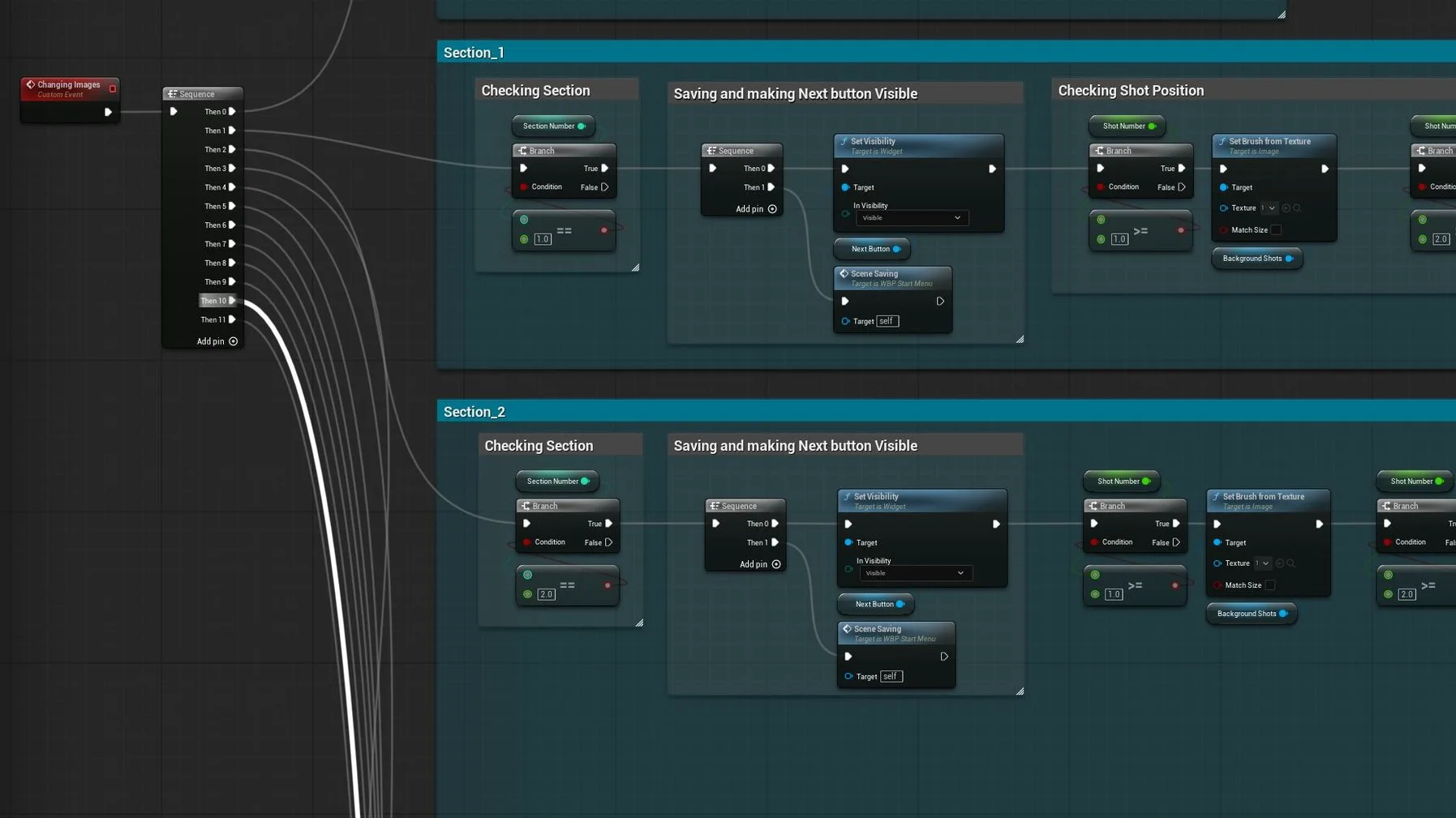
Each scene is broken down into their own sections.
At the start of each section, a branch node is used to ensure the current section-number-variable corresponds to the right scene section.
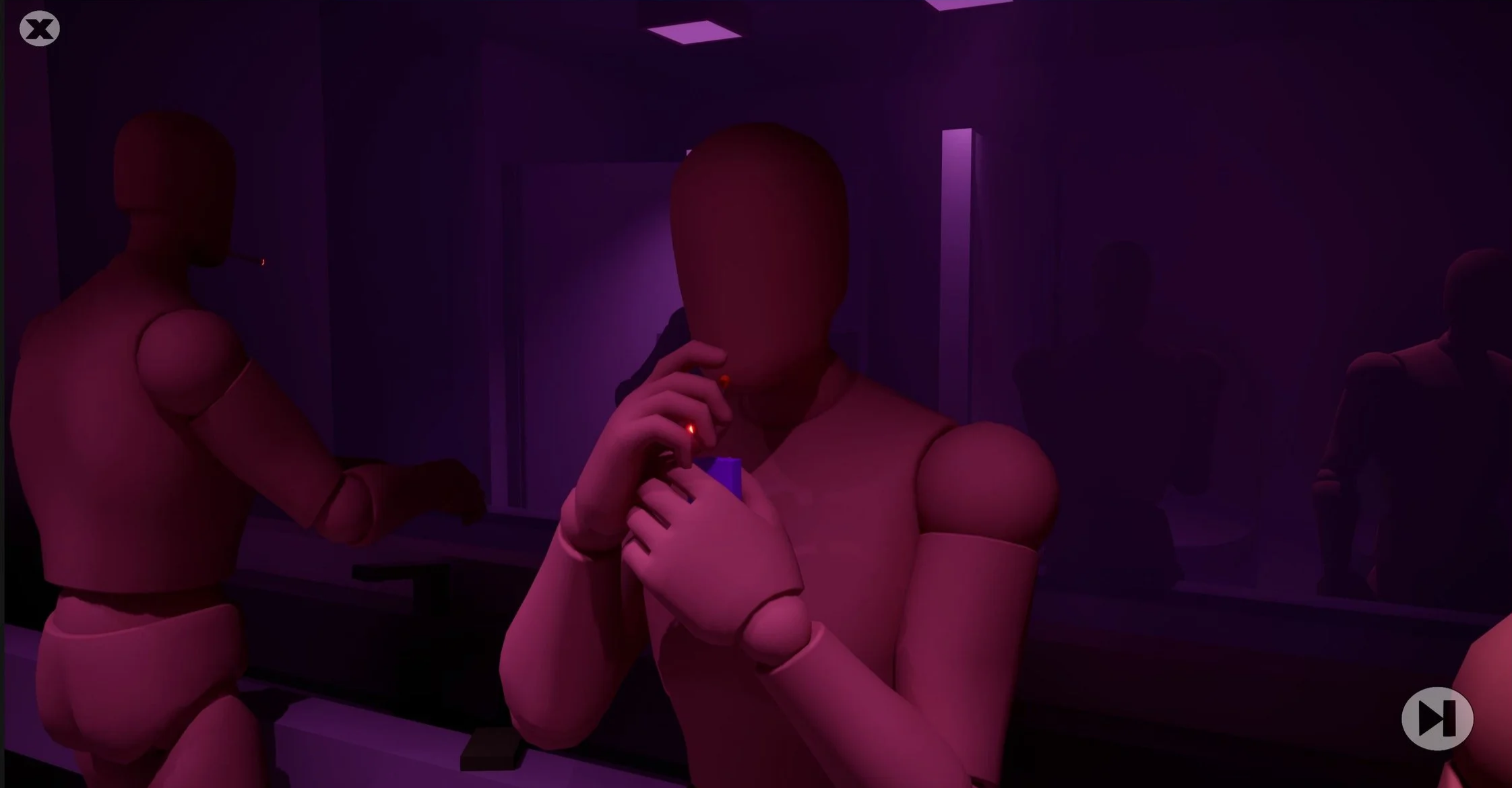
In order to move on to the following shots, players must press a ‘next button’ at the bottom right of the screen. When pressed, the shot-number-variable is increased by one, and requests the code to change images.
Every time the player presses the next button, or makes a decision, the viewport image changes to the next shot in the scene.
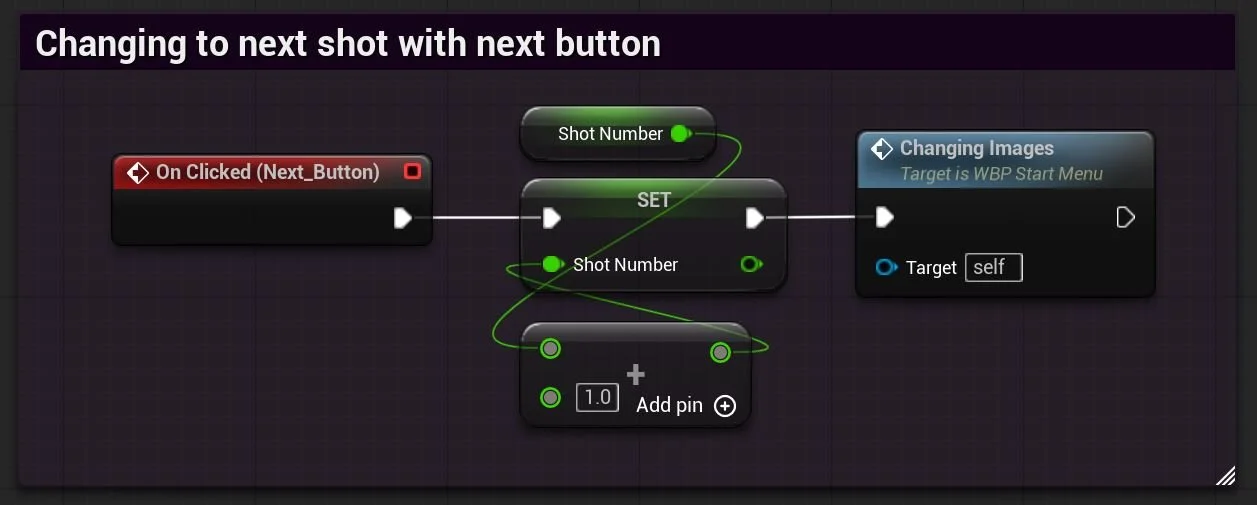
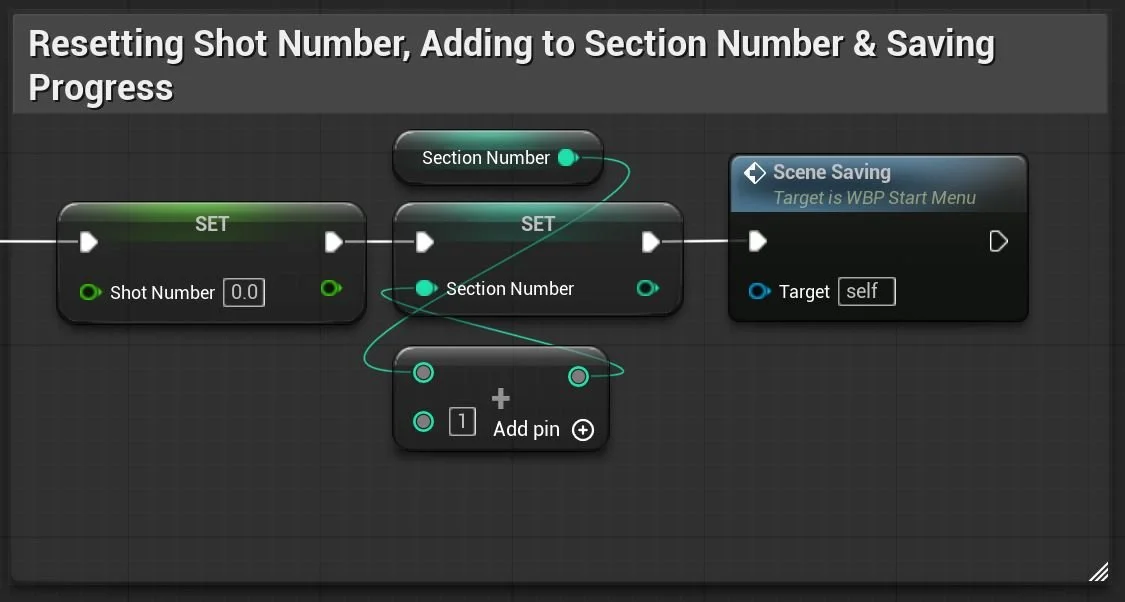
At the end of each section, the shot-number-variable is reset, and the section-number-variable is increased by one.
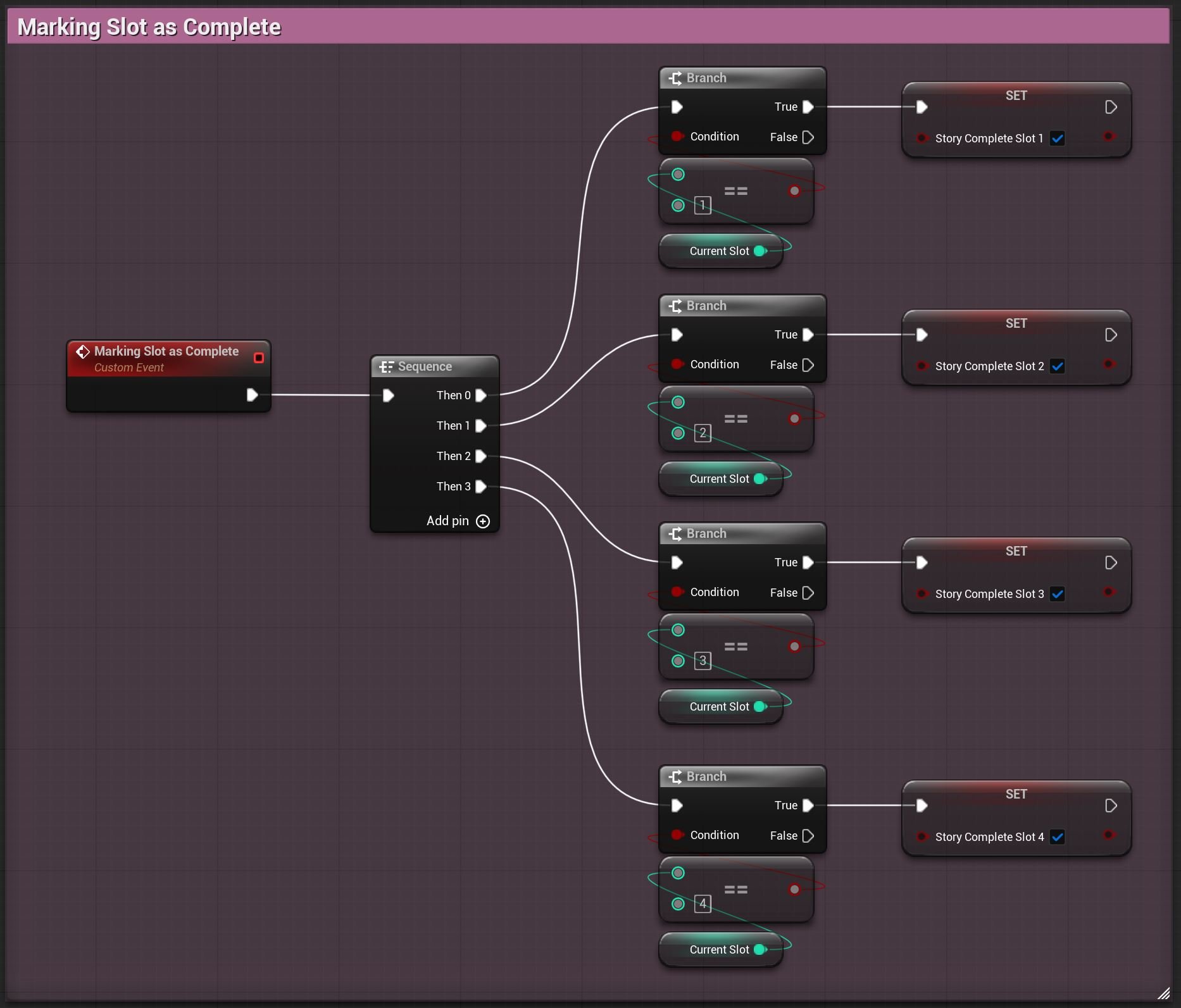
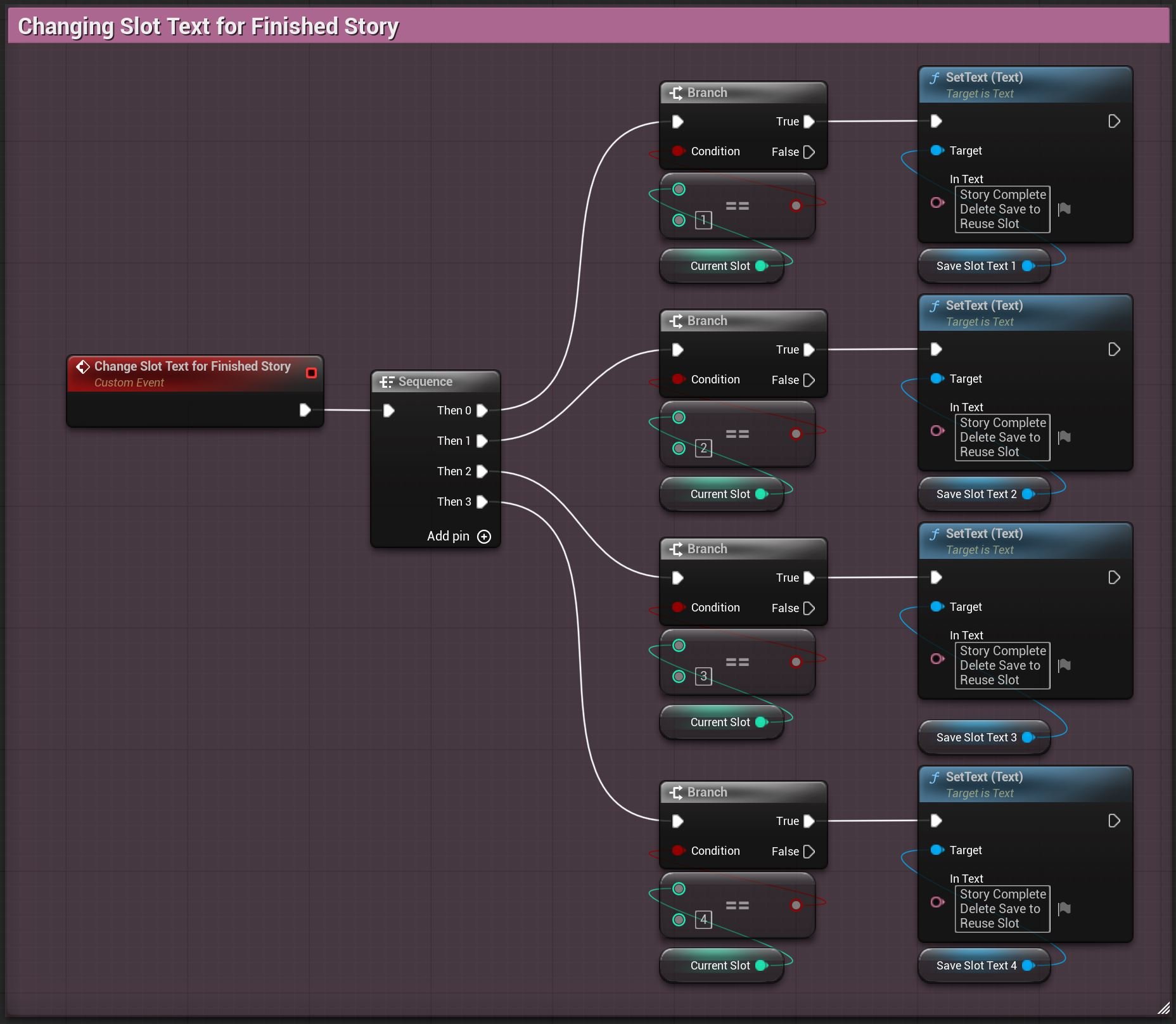
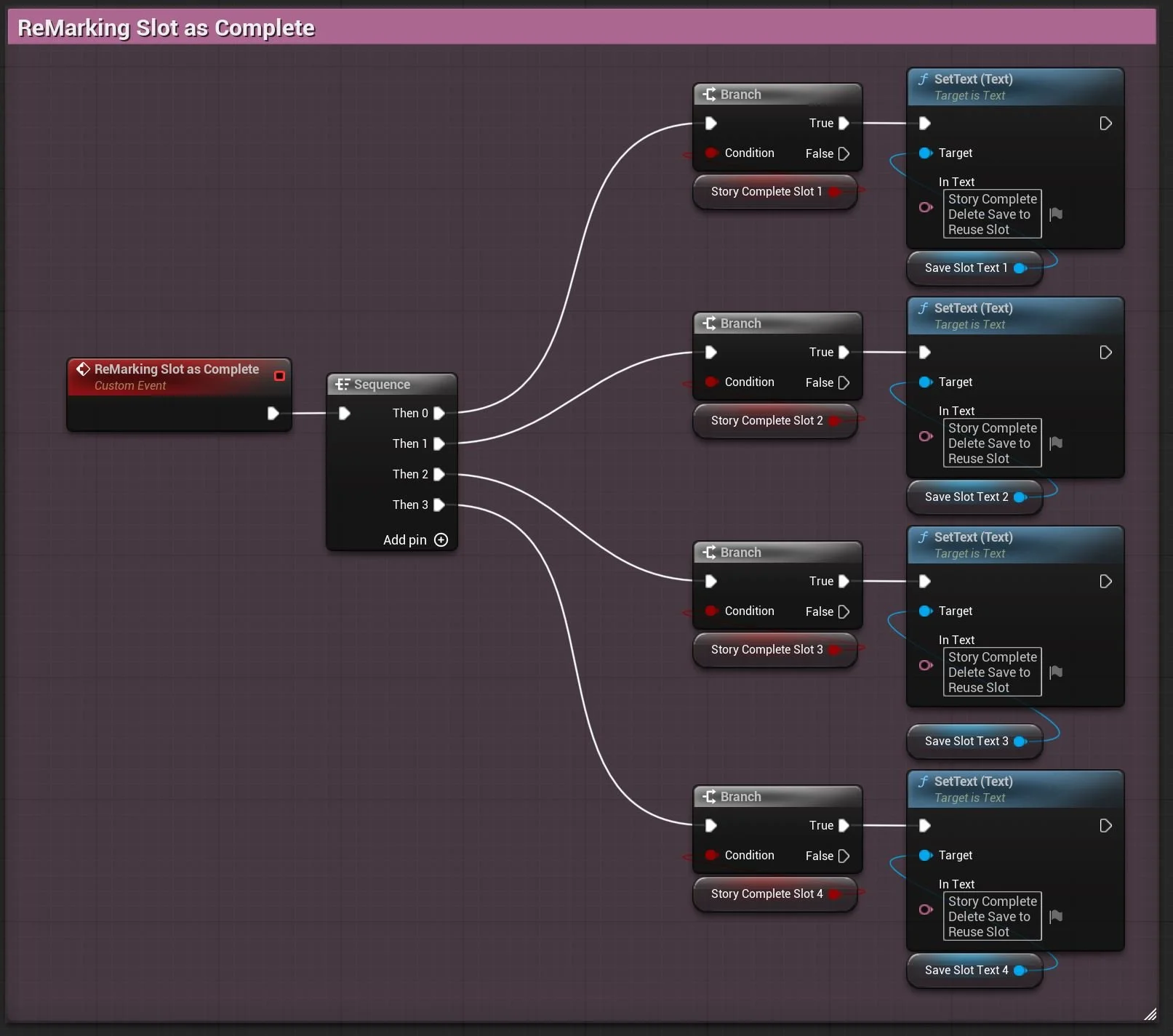
This repeats for each section until the end of the story. At this point, the save slot being played in is marked as completed and text on the save slot is changed to represent this.
Dialogue Options & Player Choices:
When a dialogue option/player choice is presented, different buttons appear to represent different possible decisions.
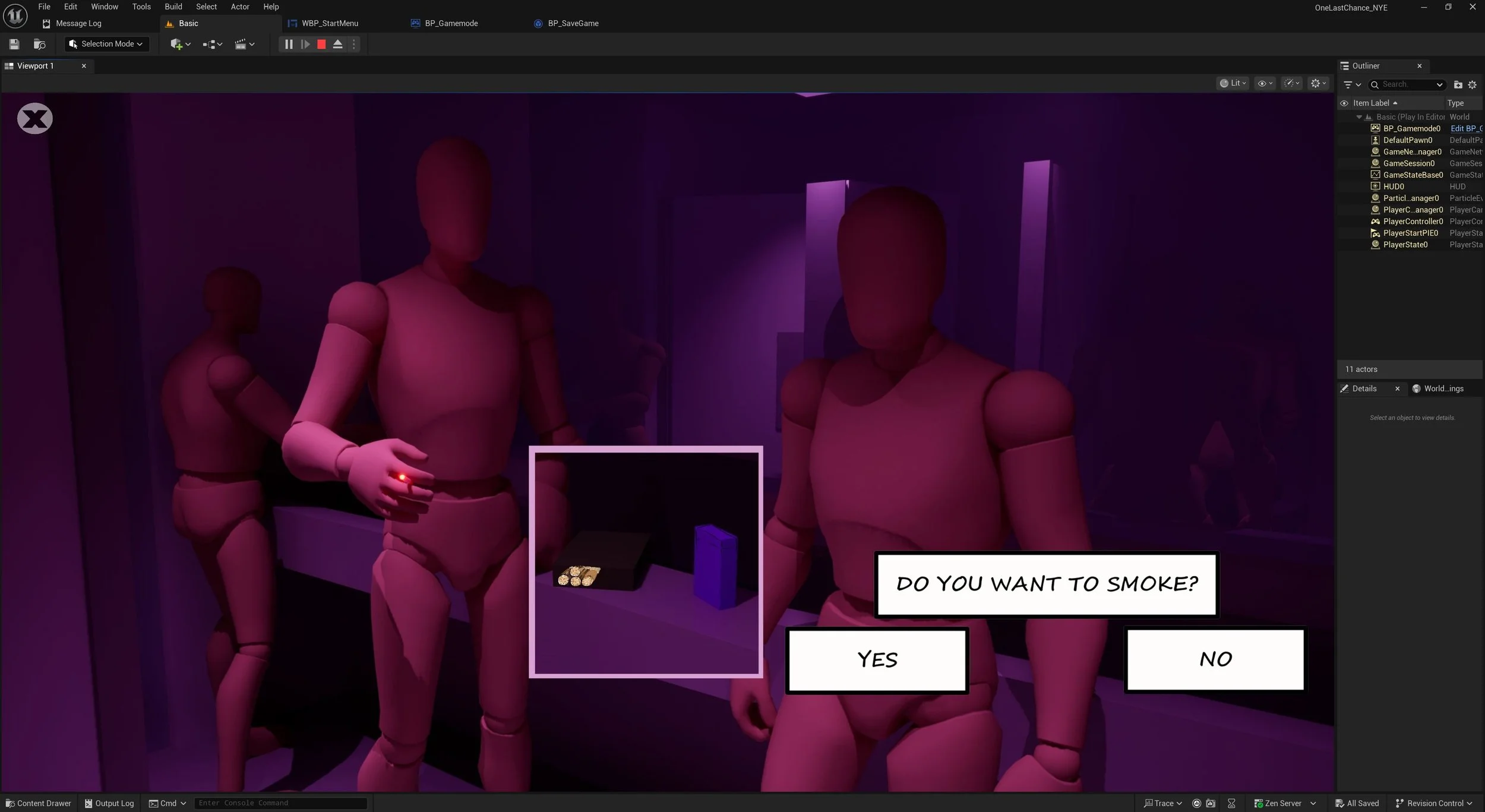
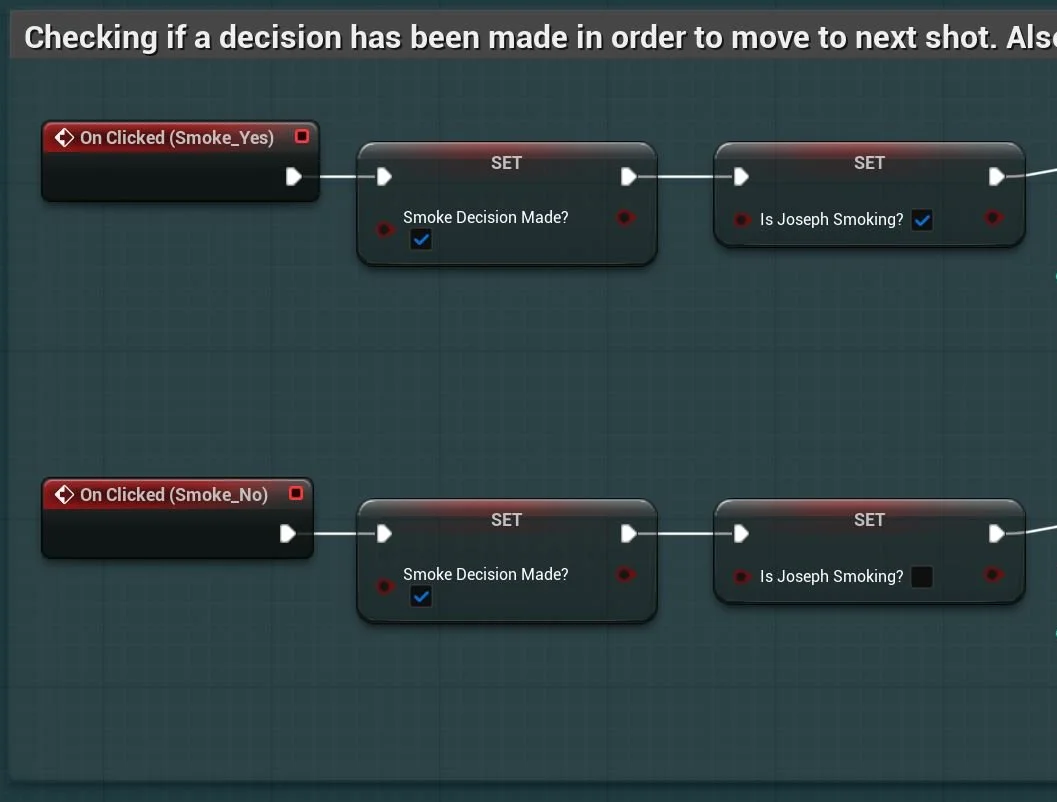
When a choice button is pressed, note of it is made in the code using booleans.
For example, if you decide to have Joseph (the player character) smoke, two booleans are set; one to see if the player has made a choice and another to see which of the possible choices has actually been made.
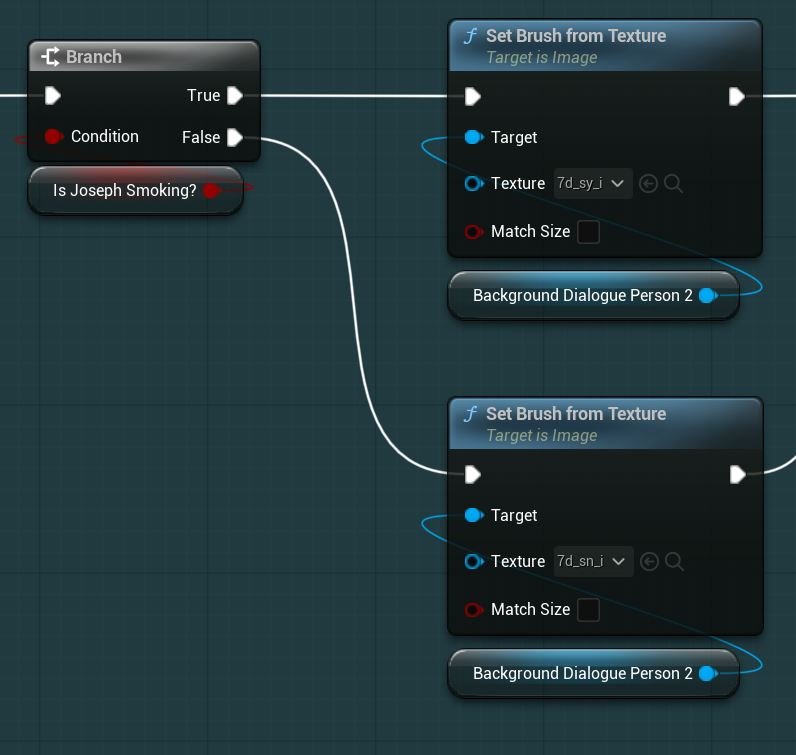
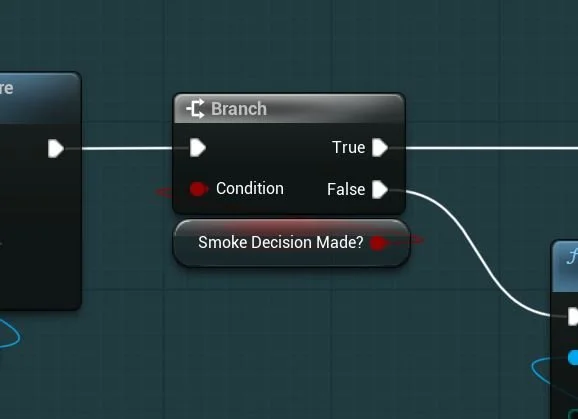
Different Endings:
Throughout the story, each decision you make will increase two variables I’ve called red & blue value.
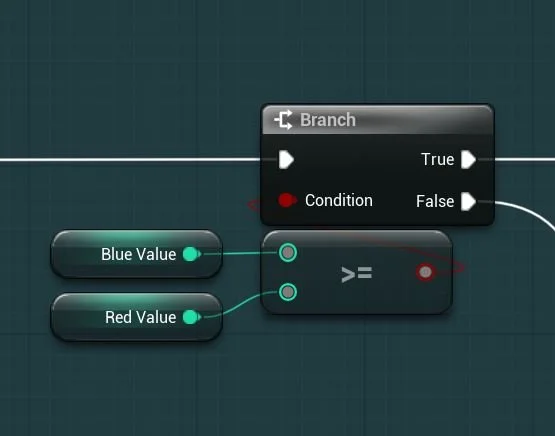
When you reach the end of the story, you will receive either a red or blue value ending. If your blue value is greater than or equal to your red value, then you will receive a blue ending.
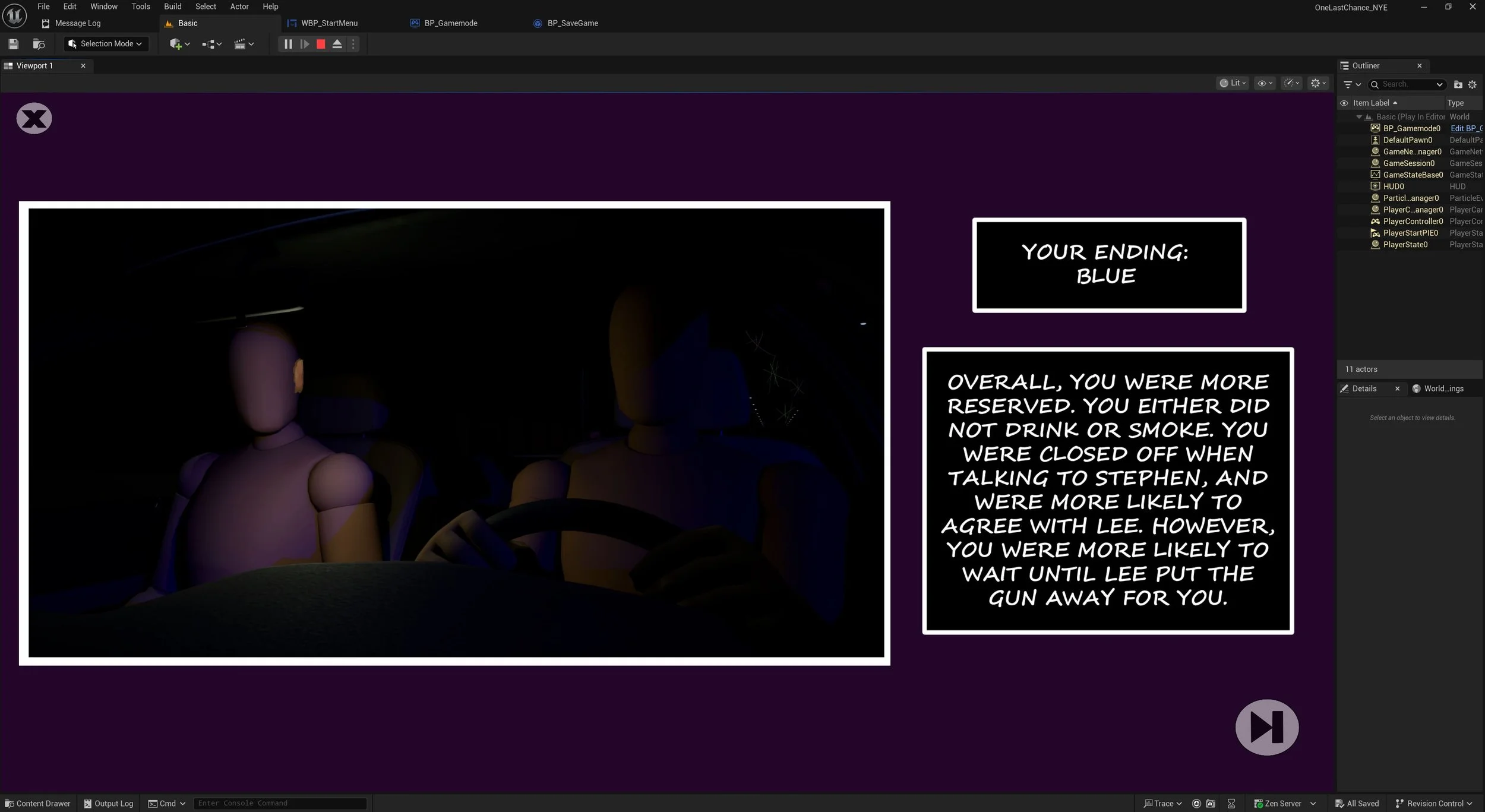
Some decisions have more of a “weight” to them and are assigned their own integer (as seen below). In these cases, the players choice not only adds to the blue or red value, it also then records the assigned integer separately, allowing for a more personalised ending.
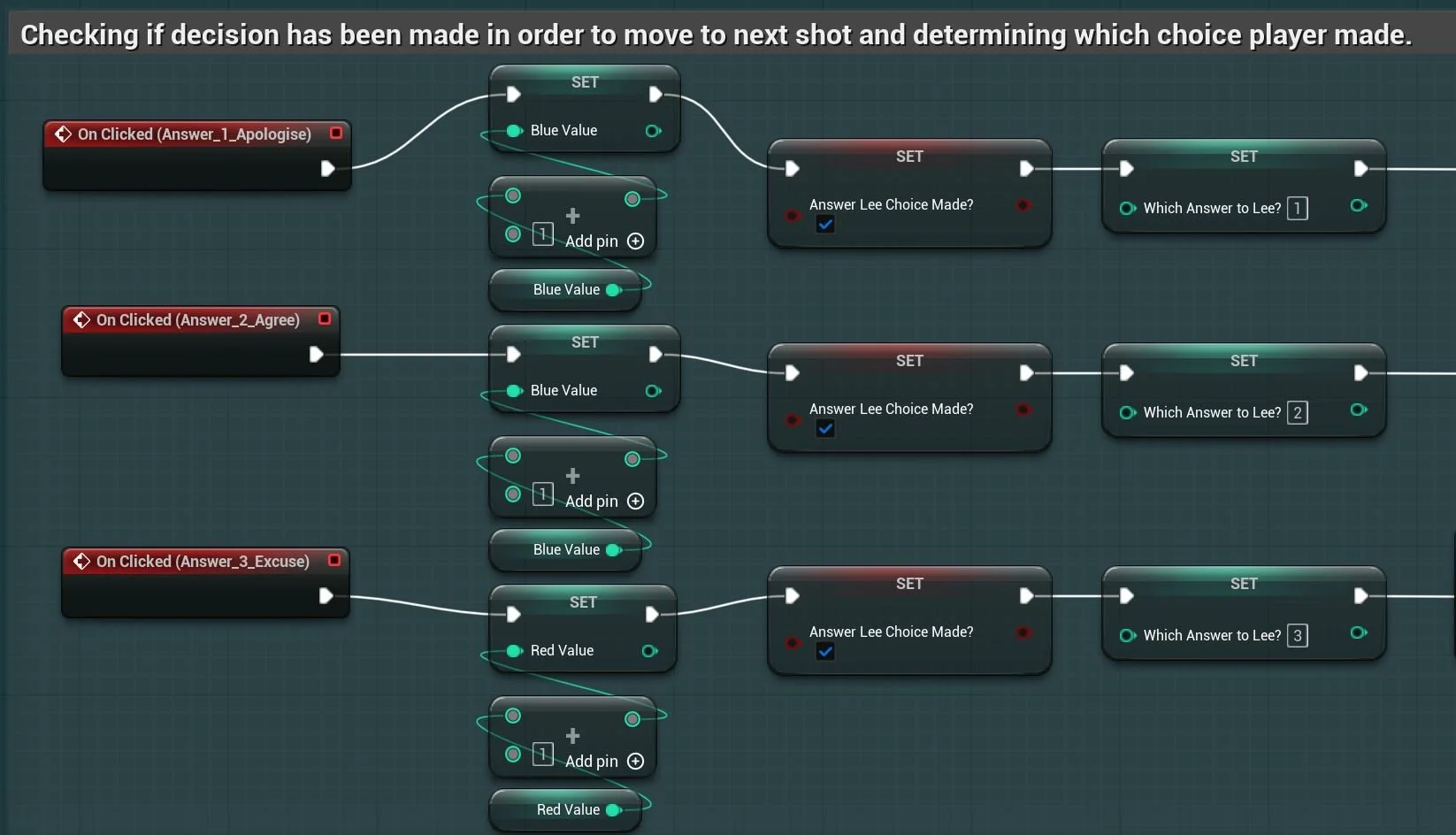
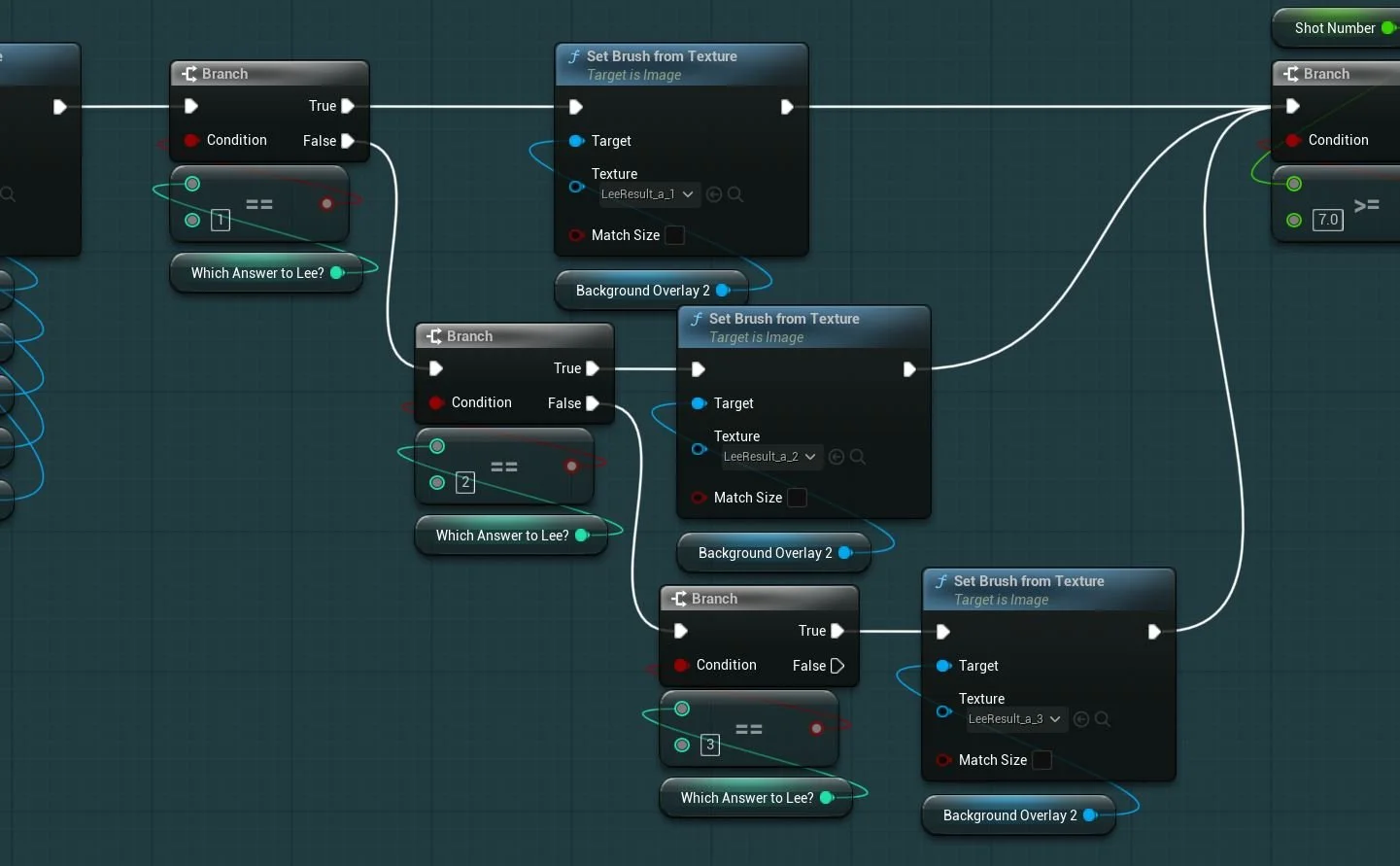
Here if you apologise to Lee, you will receive a blue value point but it is still possible to have made this decision and receive a red ending.
Some ending text is generic to a red or blue ending, however, text will change depending on how you responded to Stephen, if you made Joseph drink & smoke, etc.